Seed Cycling: How to Fit This Habit Into Real Life Daily
By:Author:Cycle Diet Editorial
Updated on:October 28, 2026

- Does This Rotation Actually Change Anything
- What Happens in Each Half of the Cycle
- How Much Seed You Need Each Day
- This Rotation Versus a Full Supplement Routine
- Making It Work on an Ordinary Week
- The Myth That Seeds Fix Hormone Problems Overnight
- What Actually Determines Whether This Sticks
- Mistakes That Quietly Undo the Habit
- Letting Cycle Diet Track Your Phases
- Starting Your First Rotation This Week
Seed cycling means rotating specific seeds through the two halves of your monthly cycle - flax and pumpkin in the first half, sesame and sunflower in the second. The idea is that different seeds offer different fats and nutrients that may support the body's natural rhythm as hormone levels shift across the month.
The mechanism is simple food logic, not magic: you're just changing which seeds you eat and when, based on which phase you're in. No seed treats or cures anything - this is about building a small, repeatable habit around food you likely already have in the cupboard.
This guide covers what rotating these seeds actually looks like day to day, how much you need, why it's easier than overhauling your whole diet, and the mistakes that quietly derail people who try it.
Does This Rotation Actually Change Anything
Here's the honest mechanism: flax and pumpkin seeds bring fibre and plant fats to the first half of your cycle, while sesame and sunflower seeds bring different fats and minerals to the second half.
The arithmetic is modest. Two tablespoons of seeds a day is roughly 100-150 calories - a small, swappable addition to a meal, not a separate regimen.
What this approach will not do is replace a varied diet or guarantee a specific hormonal outcome. What it can do is give you a consistent, low-effort reason to eat a wider range of seeds across the month, which is a reasonable nutrition habit on its own merits.
What Happens in Each Half of the Cycle
The rotation splits the month roughly in two, and each half asks something slightly different of you.
The First Half: Flax and Pumpkin
From the start of your period through to around ovulation, the rotation calls for ground flaxseed and pumpkin seeds, usually stirred into breakfast or a smoothie. It's a single swap - trade your usual topping for one of these two - so there's nothing new to cook.
The Second Half: Sesame and Sunflower
From ovulation to the next period, the rotation switches to sesame and sunflower seeds, often sprinkled over salads or blended into a dressing. The switch is the whole method - you're not adding extra meals, just changing which jar you reach for.
How Much Seed You Need Each Day
Most versions use about one to two tablespoons of seeds per day, split or whole depending on the meal.
Keeping Portions Simple
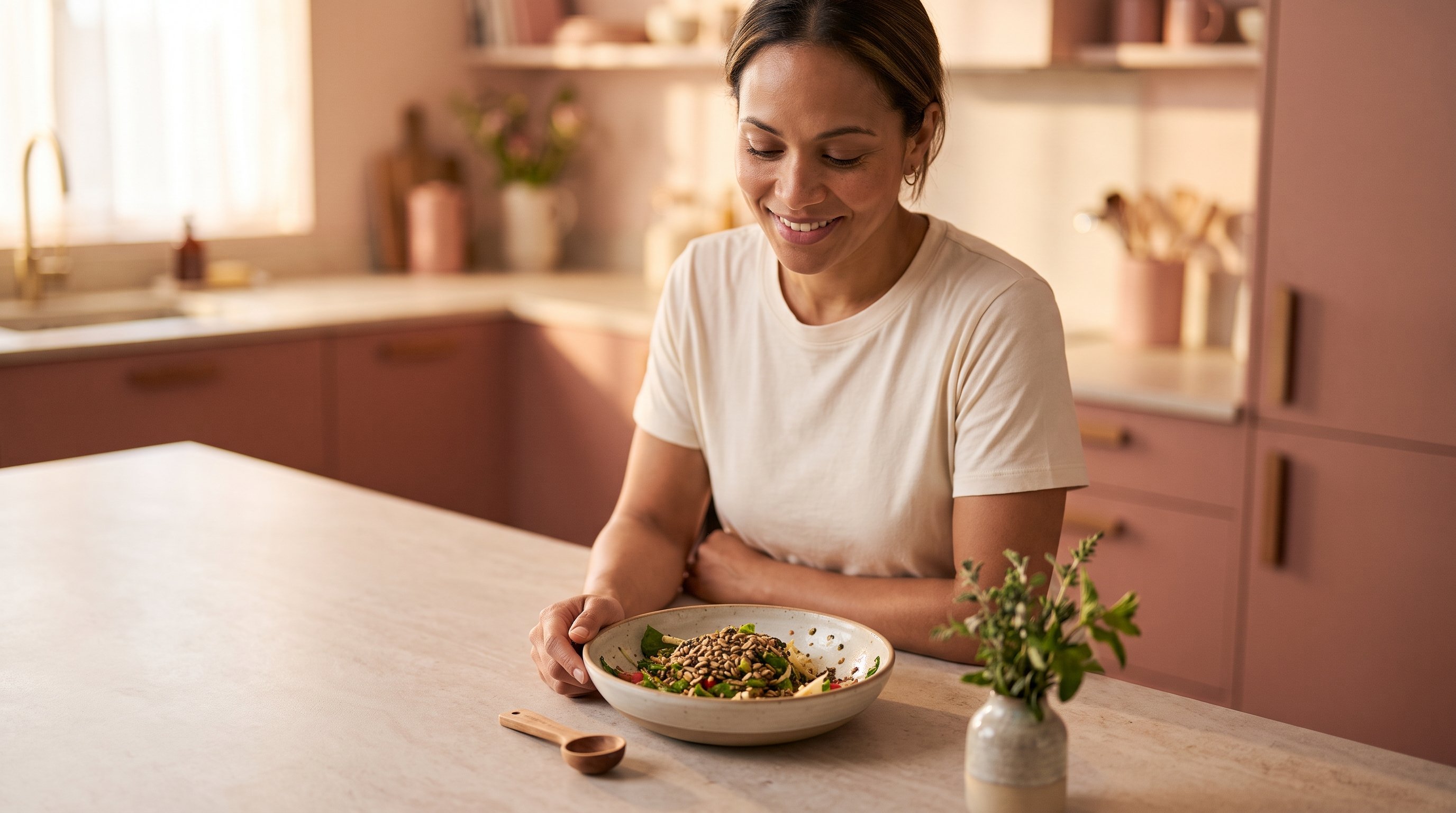
You don't need a scale for this - a tablespoon is a tablespoon, and consistency matters more than precision.
| Cycle Phase | Seed | Daily Amount |
|---|---|---|
| Days 1-14 approx | Ground flaxseed | 1 tbsp daily |
| Days 1-14 approx | Pumpkin seeds | 1 tbsp daily |
| Days 15-28 approx | Sesame seeds | 1 tbsp daily |
| Days 15-28 approx | Sunflower seeds | 1 tbsp daily |
This Rotation Versus a Full Supplement Routine
Compare this approach to a supplement stack built around capsules and powders, and the difference in adherence is obvious.
A supplement routine asks you to remember several products, track doses, and often spend more at the till each month. This rotation asks you to remember two jars and a tablespoon.
The easier habit tends to survive a busy week, a holiday, or a bad night's sleep - and a habit you actually keep beats a perfect routine you abandon after a fortnight.
Making It Work on an Ordinary Week
The habit survives best when it's attached to something you already do, like breakfast or a packed lunch.
Keep both sets of seeds visible on the counter or in clearly labelled jars, so the switch between phases doesn't rely on memory alone.
This is where a cycle-based meal plan built around food you already like can take the guesswork out of which phase you're in and which seeds belong there - Cycle Diet's tracker flags the switch for you, so you're not doing mental maths over breakfast.
The Myth That Seeds Fix Hormone Problems Overnight
No food fixes a hormone issue overnight, and seeds are no exception.
The body doesn't respond to a single ingredient on a single day - it responds to patterns built over weeks and months, and even then food is only one input among many, alongside sleep, stress and movement.
The honest answer is that this rotation is a sensible, low-risk way to diversify your fat and fibre intake across the month. Treat it as one small piece of a wider eating pattern, not a standalone fix.
What Actually Determines Whether This Sticks
A few factors decide whether this becomes a lasting habit or a jar of seeds at the back of the cupboard.
What Changes the Result
- Consistency over precision - eating the right seeds most days beats hitting an exact tablespoon every single day.
- Visibility in the kitchen - jars you can see get used; seeds buried in a cupboard get forgotten.
- Tracking the phase switch - knowing roughly where you are in your cycle is what makes the rotation make sense at all.
Mistakes That Quietly Undo the Habit
Buying All Four Seeds and Using None
It's easy to stock the cupboard and then forget which seed belongs to which phase. Start with whichever phase you're in today and add the second pair once the first feels automatic.
Treating It As a Strict Rule
Missing a day or mixing up the seeds doesn't undo the habit. This rotation is loose, not a test you can fail.

Losing Track of Cycle Days
Without a rough sense of where you are in your cycle, the whole rotation loses its logic. A simple tracker solves this faster than guessing from memory.
Expecting a Dramatic Shift
This approach is a quiet, background habit, not a noticeable event. Judge it by whether you're still doing it in a month, not by how different you feel after a week.
Letting Cycle Diet Track Your Phases
Knowing which phase you're in is most of the work with this rotation, and that's exactly where a smart period tracker with clear daily insights earns its keep.
Cycle Diet pairs its tracker with customized cycle-based meal plans and daily recommendations, so the rotation sits inside a wider routine instead of being one more thing to remember on its own. Progress tracking for water, weight and steps lives in the same place, so you're not juggling separate apps for separate habits.

Balance Hormones Naturally
Finally Feel In Sync
Starting Your First Rotation This Week
Pick one seed, add it to one meal you already eat, and let the rotation grow from there once the first swap feels normal.
Cycle Diet can help you keep track of which phase you're in and what to reach for next, turning a loose idea into a routine you don't have to think too hard about.
FAQ
This rotation on its own is a small nutrition habit, not a weight-loss method - the seeds add modest calories and fibre rather than creating a deficit. Pairing it with a wider plan built around a calorie deficit, like the one Cycle Diet offers, is what actually moves the needle.
The seeds themselves are ordinary wholefoods with established nutrient profiles, so there's nothing risky about eating them. The honest position is that rotating them by cycle phase is a reasonable, low-cost habit rather than a proven hormonal intervention.
You don't need exact precision - rough awareness of which half of your cycle you're in is enough to pick the right seeds most days. A simple tracker removes the guesswork if your cycle is irregular or hard to predict.
The most common drop-off point is losing track of which phase they're in and giving up on the whole rotation out of confusion. Keeping both sets of seeds visible and tracking your cycle dates solves most of that friction.
Share this post