Leg Workout at Home: How to Build Strength in a Real Week
By:Author:Cycle Diet Editorial
Updated on:October 28, 2026

- Can a Bodyweight Leg Workout Really Build Strength
- What's Actually Happening in Each Leg Movement
- How Many Leg Sessions a Week Actually Helps
- Home Leg Training Versus a Gym Leg Day
- Making a Leg Workout Work Around a Real Week
- The Myth That Leg Exercises Shape One Area
- What Changes the Result of Your Leg Training
- Mistakes That Quietly Undermine Leg Day at Home
- Letting Cycle Diet Guide Your Leg Workout Plan
- Starting Your First Leg Session This Week
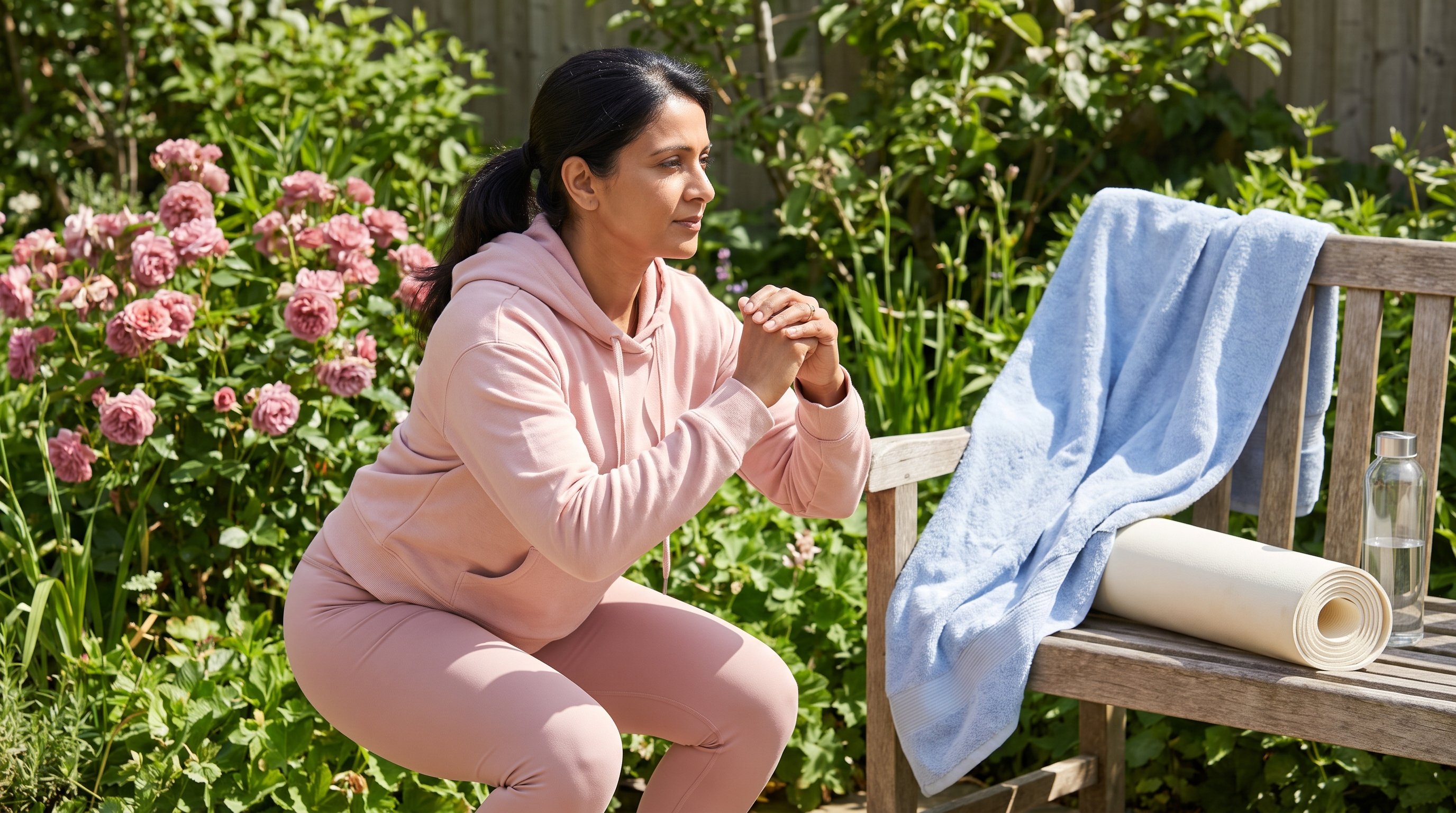
A leg workout at home works because your muscles respond to tension and repetition, not to the postcode where you train them. Bodyweight squats, lunges and step-ups create enough load to challenge your legs, especially if you slow the movement down or add pauses.
The mechanism is simple: muscle gets stronger when it's asked to do more than it's used to, a little at a time. A sofa, a staircase and a few square metres of floor give you everything that principle needs.
This guide covers whether home leg training actually works, how often to do it, the mistakes that undo progress, and how to fit it into a week that's already full.
Can a Bodyweight Leg Workout Really Build Strength
Yes, within limits worth being honest about. Muscles don't know whether resistance comes from a barbell or from your own bodyweight held at an awkward angle - they just respond to tension.
A bodyweight squat held for a slow four-count down and a one-count pause at the bottom creates meaningfully more time under tension than a quick, bouncy rep. That's the lever home training leans on when there's no extra weight to add.
The honest arithmetic: if you do three rounds of 15 squats, 12 lunges per leg and 10 step-ups per leg, that's over a hundred controlled leg movements in one session. Do that two or three times a week and the muscle is getting a real, repeated stimulus - it adds up the same way a gym session adds up, just with your own body supplying the resistance.
What's Actually Happening in Each Leg Movement
Tension Builds the Stimulus
Every squat, lunge or step-up puts your quads, glutes and hamstrings under load the moment you lower down. Slowing the descent or pausing at the bottom increases how long the muscle stays under that load, which is the main driver of a bodyweight session feeling harder without adding any weight.
Balance Work Recruits More Muscle
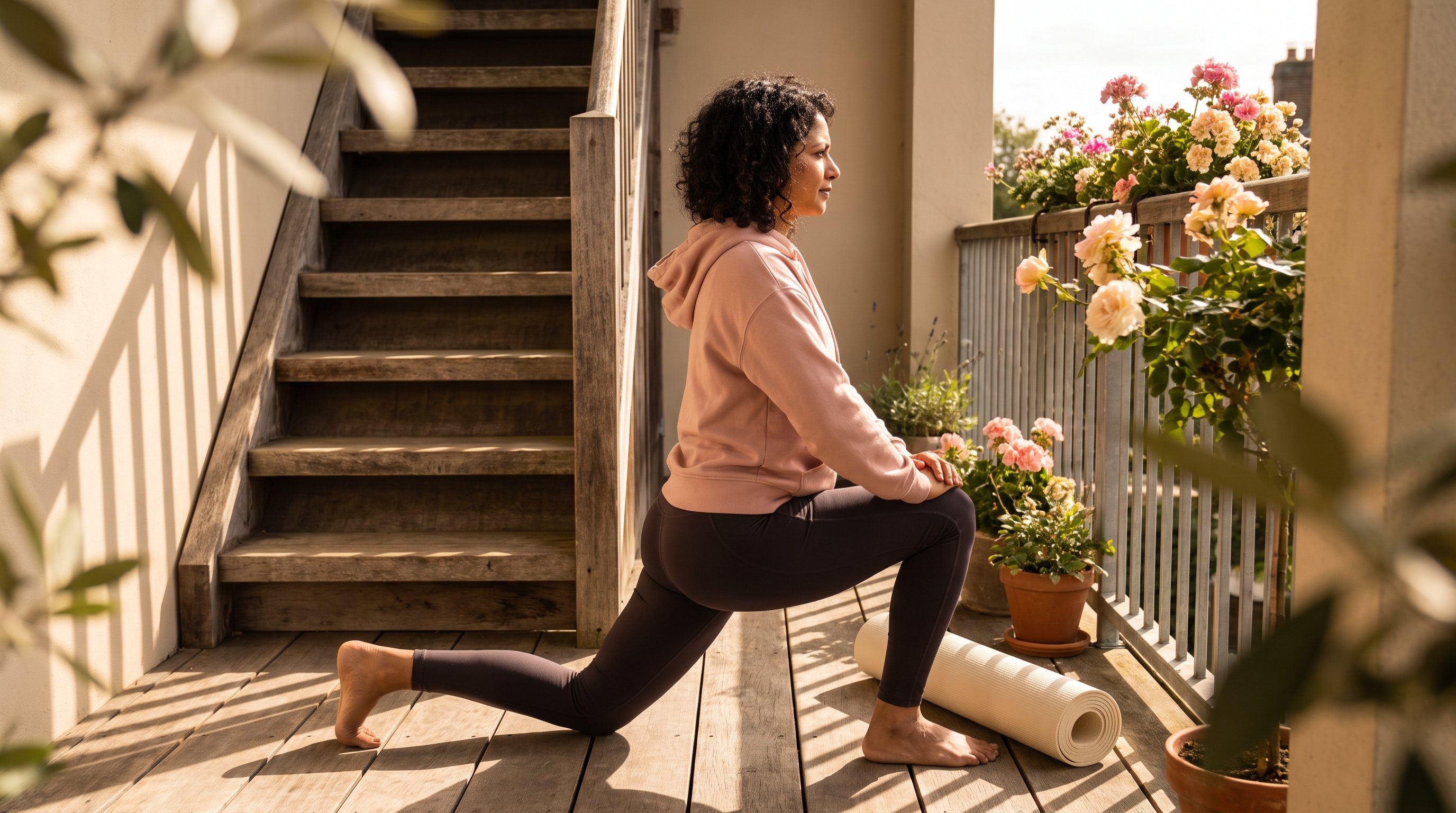
Single-leg moves like lunges and step-ups force one leg to stabilise the whole movement instead of sharing the work with the other side. That recruits smaller stabilising muscles around the hip and ankle that a two-footed exercise like a squat tends to let off the hook.
How Many Leg Sessions a Week Actually Helps
Start With Two or Three Sessions
Two to three leg sessions a week, spaced with a rest day between, gives muscle time to recover and adapt. Training legs every single day without a break tends to leave you too fatigued to hold good form, which blunts the whole point of the session.
Here's a simple weekly structure to apply straight away.
| Day | Focus | Volume |
|---|---|---|
| Monday | Squats and lunges | 3 rounds |
| Tuesday | Rest or walking | Light |
| Wednesday | Step-ups and glute bridges | 3 rounds |
| Friday | Full mixed circuit | 3 rounds |
| Weekend | Rest or stretching | Light |
Home Leg Training Versus a Gym Leg Day
A gym leg day with a leg press, barbell and squat rack can load the muscle more heavily than bodyweight work ever will. But that's only an advantage if you actually show up and use it week after week.
A home leg workout removes the travel time, the membership fee and the wait for a machine - all friction that quietly erodes consistency over months. Fewer barriers means more sessions actually get done, and a slightly lighter session done three times a week tends to beat a heavier one done once a fortnight.
The stronger habit usually wins over the harder stimulus, simply because it survives contact with a busy week.
Making a Leg Workout Work Around a Real Week
A leg session doesn't need a dedicated block of free time to count. Ten minutes before a shower, during a work call on mute, or split across a morning and evening still adds up to the same total workload.
Pairing it with something you already track - water, steps, sleep - makes it easier to notice when a week has quietly gone leg-session-free. Keeping workouts, water intake and weight in one place, as a progress tracker does, makes that pattern visible instead of something you only notice a month later.
The Myth That Leg Exercises Shape One Area
No single leg exercise reshapes just the thighs or just the calves. The body doesn't let you choose where fat is used from, no matter how targeted the movement feels.
What squats, lunges and step-ups do is build strength and muscle tone through the legs as a whole, over a stretch of consistent training. Any change in how your legs look is the result of the whole package - training, eating pattern and time - not of one exercise working on one spot.
What Changes the Result of Your Leg Training
Three things matter more than any single exercise choice.
The Biggest Levers
- Consistency over weeks - two sessions done every week beats four sessions done once and then abandoned.
- Controlled tempo - slowing the lowering phase of a squat or lunge adds difficulty without needing any equipment.
- Gradual progression - adding a few extra reps or a slower pause each week keeps the muscle adapting instead of plateauing.
Mistakes That Quietly Undermine Leg Day at Home
Rushing Through the Reps
Fast, bouncy squats reduce the time your muscles spend under tension, which makes the whole set less effective. Slow the descent down and the same number of reps does more work.
Skipping Rest Days Entirely
Training legs every day without recovery leaves you fatigued and more likely to cut sets short. A day of rest or gentle walking between sessions lets the muscle actually adapt.

Never Adding Any Challenge
Doing the exact same three exercises at the exact same pace for months gives the muscle no reason to keep adapting. Adding reps, slowing the tempo or raising a step height keeps it moving forward.
Ignoring How Legs Feel on Different Days
Energy and strength naturally shift across a month, and pushing for the same intensity every single day ignores that. Scaling the session down on a low-energy day keeps the habit going instead of breaking it.
Letting Cycle Diet Guide Your Leg Workout Plan
Picking which leg exercises to do and when to scale them back is easier with a plan that already accounts for how your energy shifts across a month.
Cycle Diet's library of over 100 workouts and exercises includes simple cycle-based leg and lower-body routines, built to match how you're actually feeling rather than a fixed schedule that ignores it.
Its customized insights flag when to push a session harder and when to scale it back, and the progress tracker keeps your workouts logged alongside water, weight and steps so the whole picture stays in one place - no separate spreadsheet needed to see whether leg day is actually happening.

Balance Hormones Naturally
Finally Feel In Sync
Starting Your First Leg Session This Week
Pick one day this week and do three rounds of squats, lunges and step-ups, however that fits around the rest of the day. That single session is the only thing that needs to happen first - everything else builds from there.
A cycle-based fitness plan can take the guesswork out of what comes next, pairing leg workouts with a wider plan that adjusts as your week and your cycle do.
FAQ
Yes, bodyweight moves like squats, lunges and step-ups create real tension on the muscle, and strength builds from consistent tension over weeks. The visible part depends on how long you keep the habit going, not on which exercise you pick first.
Gym equipment allows heavier loading, but a session you actually do three times a week beats a heavier one you skip most weeks. Slower tempo and single-leg moves can make bodyweight training feel demanding even without added weight.
Squats, lunges and step-ups each need less than two square metres, and a staircase or sturdy chair covers most of what's required. Space is rarely the real barrier - time and consistency usually are.
One missed week doesn't undo the strength already built - just pick the routine back up the following week. A progress tracker can help flag the gap early so it doesn't quietly stretch into a month.
Share this post